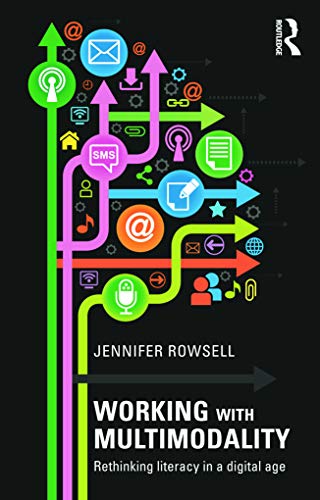
Working with Multimodality
Product Description
Working with Multimodality
<P>In today’s digital world, we have multiple modes of meaning-making: sounds, images, hypertexts. Yet, within literacy education, even ‘new’ literacies, we know relatively little about how to work with and produce modally complex texts.  <BR> <BR>In <EM>Working with Multimodality</EM>, Jennifer Rowsell focuses on eight modes: words, images, sounds, movement, animation, hypertext, design and modal learning. Throughout the book each mode is illustrated by cases studies based on the author’s interviews with thirty people, who have extensive experience working with a mode in their field. From a song writer to a well known ballet dancer, these people all discuss what it means to do multimodality well. </P> <P>This accessible textbook brings the multiple modes together into an integrated theory of multimodality. Step-by-step, beginning with theory then exploring modes and how to work with them, before concluding with how to apply this in an investigation, each stage of working with multimodality is covered.</P> <P><EM>Working with Multimodality</EM> will help students and scholars to:  <BR>• Think about specific modes and how they function  <BR>• Consider the implications for multimodal meaning-making <BR>• Become familiar with conventions and folk knowledge about given modes  <BR>• Apply this same knowledge to their own production of media texts in classrooms   </P> <P>Assuming no prior knowledge about multimodality and its properties, <EM>Working with Multimodality</EM> is designed to appeal to advanced undergraduate and postgraduate students interested in how learning and innovation is different in a digital and media age and is an essential textbook for courses in literacy, new media and multimodality within applied linguistics , education and communication studies.</P> <P> </P>
Technical Specifications
You might also like
Multimodal Composing in Classrooms: Learning and Teaching for the Digital World

Multimodal Literacies and Emerging Genres (Pitt Comp Literacy Culture)

Digital Rhetoric: Theory, Method, Practice (Digital Humanities)
Multimodal Literacy (New Literacies and Digital Epistemologies)

Multimodality, Learning and Communication: A social semiotic frame

The Routledge Handbook of Multimodal Analysis

Literacy in the New Media Age (Literacies)

Ethnography, Superdiversity and Linguistic Landscapes: Chronicles of Complexity (Critical Language and Literacy Studies)

Participatory Culture in a Networked Era: A Conversation on Youth, Learning, Commerce, and Politics

Participatory Composition: Video Culture, Writing, and Electracy