Matisse. Cut-outs (Basic Art)
Product Description
Matisse. Cut-outs (Basic Art)
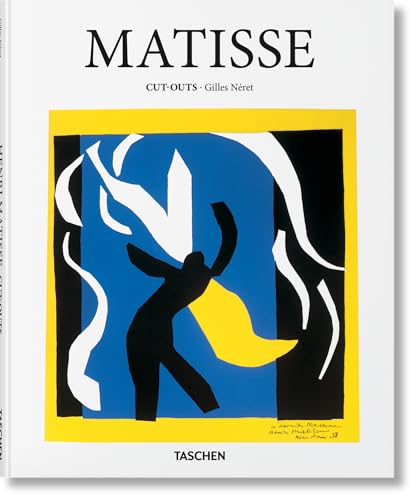
<strong>Painting with scissors</strong><br /> How Matisse bowed out in a riot of colorful shapes and patterns<br /><br /> <strong>Henri Matisse</strong> (1869€“1954) was a fighting spirit. Despite a cancer diagnosis in 1941, increasing frailty and the confines of a wheelchair, the indomitable Frenchman <strong>never stopped in his quest to make art</strong>. With what he called €œune seconde vie,€ a second life, he embarked on a remarkable collage period, cutting and pasting pieces of colored paper into €œgouaches d©coup©es€ of <strong>birds, plants, flowers, and the female form</strong>.<br /><br /> Emphasizing color and contrast, the cut-out technique generated both <strong>striking lines and vivid juxtapositions</strong>. In works such as <em>The Fall of Icarus</em> (1943), <em>The Blue Nude</em> (1952), <em>The Snail</em> (1953), and <em>La Gerbe</em> (1953), <strong>clean forms and elemental structures</strong> power a compositional force that belies the work€s decorative appeal, at once tightly organized and <strong>infectious with <em>joie de vivre</em></strong>. As his work progressed, Matisse€s excitement with his results fueled ever-larger pieces, advancing from small works to <strong>vast wall-sized murals</strong>.<br /><br /> As his final years approached, Matisse reveled in the simplicity and brilliance of these pieces, avowing, €œOnly what I created after the illness constitutes my real self: free, liberated...€ In this essential introductory book, we revisit this joyful final chapter of Matisse€ long and prodigious career, examining how the <strong>cut-outs encapsulated the artist€s many years exploring the possibilities of composition, form, and color</strong>.