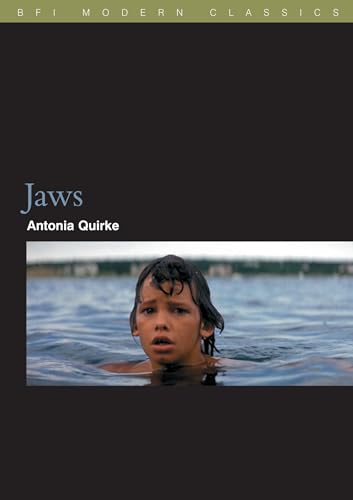
Jaws (BFI Modern Classics)

Product Description
Jaws (BFI Modern Classics)
<DIV><DIV><DIV>Steven Spielberg's second feature, released in 1975, was an adaptation of a best-selling trash novel about a killer shark's effect on a New England tourist town. Under extreme pressure on a catastrophic location shoot, Universal's 27 year-old prodigy crafted a thriller so effective that for many years <I>Jaws</I> was the highest-grossing film of all time. It was also instrumental in establishing the concepts of the event movie and the summer blockbuster. <I>Jaws</I> exerts an extraordinary power over audiences. Apparently simplistic and manipulative, it is a film that has divided critics into two broad camps: those who dismiss it as infantile and sensational - and those who see the shark as freighted with complex political and psychosexual meaning. Antonia Quirke, in an impressionistic response, argues that both interpretations obscure the film's success simply as a work of art. In <I>Jaws</I> Spielberg's ability to blend genres combined with his precocious technical skill to create a genuine masterpiece, which is underrated by many, including its director. Indeed, Quirke claims, this may be Spielberg's finest work.</DIV></DIV></DIV>


