Hopper (Basic Art Series 2.0)

Product Description
Hopper (Basic Art Series 2.0)
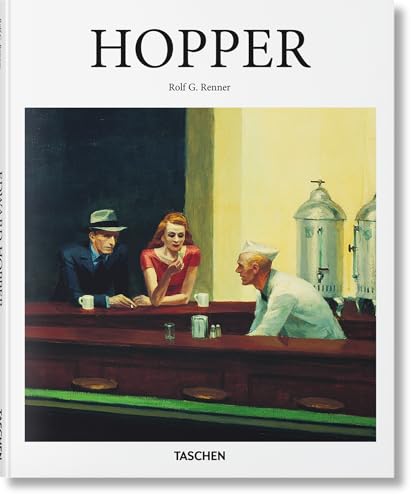
<div id="description_text_headlines" class="margin-bottom"><strong>Lonely arts: A distinct eye for alienation</strong></div> <div class="margin-bottom"> </div> <div class="description_text"> <div id="description_text" class="margin-bottom"><strong>Edward Hopper (1882–1967)</strong> is something of an American success story, if only his success had come swifter. At the age of 40, he was a failing artist who struggled to sell a single painting. As he approached 80, <em>Time </em>magazine featured him on its cover. Today, half a century after his death, Hopper is considered a giant of modern expression, with an uncanny, unforgettable, and <strong>utterly distinct sense for mood and place</strong>.<br /><br />Much of Hopper's work excavates <strong>modern city experience</strong>. In canvas after canvas, he depicts diners, cafes, shopfronts, street lights, gas stations, rail stations, and hotel rooms. The scenes are marked by <strong>vivid color juxtapositions </strong>and <strong>stark, theatrical lighting</strong>, as well as by <strong>harshly contoured figures,</strong> who appear at once part of, and alien to, their surroundings. The ambiance throughout his repertoire is of an<strong> eerie disquiet</strong>,<strong> alienation, loneliness and psychological tension</strong>, although his rural or coastal scenes can offer a counterpoint of tranquility or optimism.<br /><br />This book presents key works from Hopper's œuvre to introduce a key player not only in American art history but also in the American psyche.</div> <div class="margin-bottom"> </div> <div id="series_text" class="margin-bottom"><strong>About the Series:</strong><br />Each book in TASCHEN’s Basic Art series features: <ul> <li>a detailed chronological summary of the life and oeuvre of the artist, covering his or her cultural and historical importance</li> <li>a concise biography</li> <li>approximately 100 illustrations with explanatory captions</li> </ul> </div> </div>