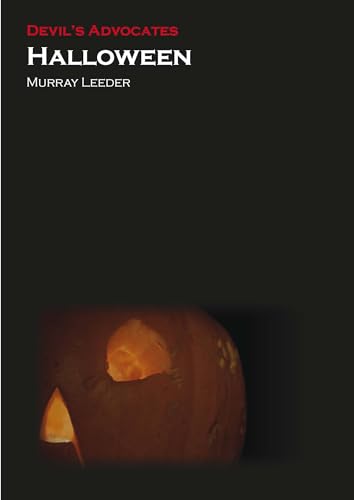
Halloween (Devil's Advocates)
Product Description
Halloween (Devil's Advocates)
The 1970s represented an unusually productive and innovative period for the horror film, and John Carpenter's <i>Halloween</i> (1978) is the film that capped that golden age – and some say ruined it, by ushering in the era of the slasher film. Considered a paradigm of low-budget ingenuity, its story of a seemingly unremarkable middle-American town becoming the site of violence on October 31 struck a chord within audiences. The film became a surprise hit that gave rise to a lucrative franchise, and it remains a perennial favourite. Much of its success stems from the simple but strong constructions of its three central characters: brainy, introverted teenager Laurie Strode, a late bloomer compared to her more outgoing friends, Dr. Loomis, the driven, obsessive psychiatrist, and Michael Myers, the inexplicable, ghostlike masked killer.<br><br>Film scholar Murray Leeder offers a bold and provocative study of Carpenter's film, which hopes to expose qualities that are sometime effaced by its sequels and remakes. It explores <i>Halloween</i> as an unexpected ghost film, and examines such subjects as its construction of the teenager, and the relationship of <i>Halloween</i> the film to Halloween the holiday, and Michael Myers's brand of "pure evil." It is a fascinating read for scholars and fans alike.
Technical Specifications
You might also like

Halloween: The Changing Shape of an Iconic Series

Halloween: The Official Movie Novelization

The Thing (Devil's Advocates)
Creepshow (Devil's Advocates)

The Texas Chain Saw Massacre (Devil's Advocates)

NECA - Halloween (2018) - 7" Scale Action Figure - Ultimate Laurie Strode

Mezco Toyz Halloween (1978): Michael Myers Figure