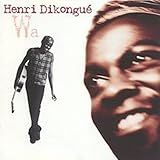
C'Est La Vie

Product Description
C'Est La Vie
Don't mistake Dikongué's music for the Afro Beat sounds of <I>makossa</I>, the national pop music of his home, Cameroon. He holds a musical ethic much closer to Pierre Akendengue or Francis Bebey--one where poetry and mood prevail over groove and danceability. This guitarist has integrated not only the Afro-Parisian sound, but allows Latin, Caribbean, and other regions of Africa to flow naturally into his compositions and playing style. It all seems effortless, almost breezy, but there is an underlying poetic complexity that makes the music almost impossible to ignore. Even the "dance tracks" have a suave sophistication and worldliness, a loveliness that is almost unknown to most fans of "African" music. The songs here modulate between simple solo guitar and voice ballads to fuller bands with violin, kit drums, and bass, occasionally allowing even some brass to insinuate itself into the mix. There are one or two saccharine moments, but the intrusion is minimal. Dikongué's sweet, quavering voice and direct acoustic guitar are always front and center, delivering the goods direct to the heart first, and the feet after. <I>--Louis Gibson</i>